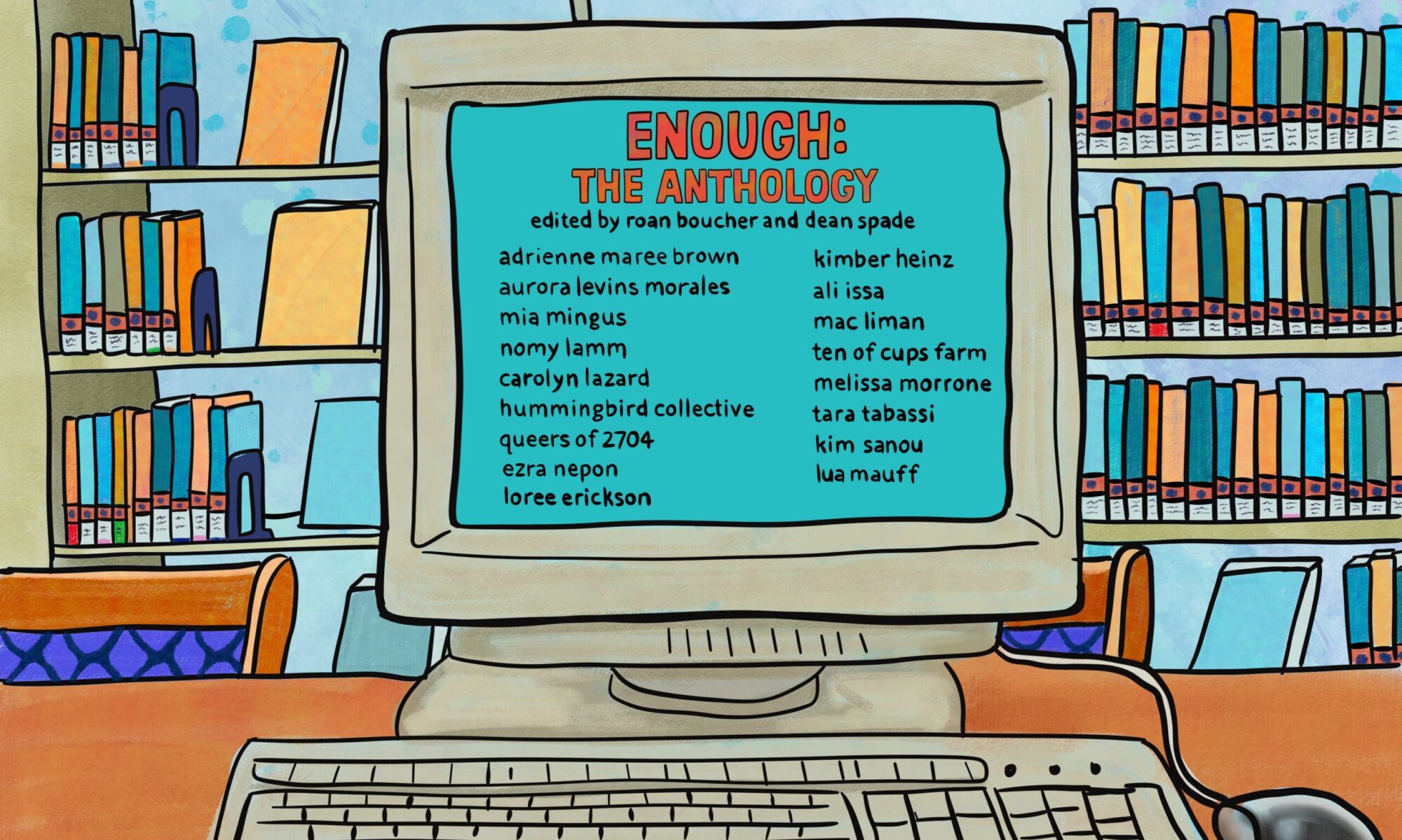
February 2024
When the Hummingbird collective formed, Arizona’s SB1070 was the worst anti-immigrant legislation in the country. SB1070 illuminated the right-wing national strategy of terrorizing undocumented people, laying the groundwork for Trump in a pre-Trump era. The organizing against SB1070 was the pivotal moment around building investment and infrastructure in the grassroots Left in Arizona. Arizona went blue — and is now a swing state — not because of the local or national Dem party, but because of the grassroots organizing led by undocumented people during the SB1070 resistance, and how it shaped Arizona grassroots organizing since. Over the years, Hummingbird Collective moved $453,000 to immigrant justice.
While the Hummingbird collective funding model was imperfect, it made some crucial interventions in the scope, scale and breadth of donor organizing across the country. Specifically, it opened the door to more national formations of donors organizing each other to move money to movements, and laid the groundwork for organizations like RG and Solidaire to organize and fundraise members.
January 2013
From theory to Action
Dedicated to funding grassroots, people of color-led organizing for migrant and border justice in Arizona, the Hummingbird Collective is co-organized by grassroots organizations in Arizona and young people with access to wealth from across the country. This project redistributes wealth in order to support movements to end oppressive systems that keep us separated along lines of class, race and citizenship. We believe that no one is free until everyone is free.
In November 2010, at a conference put on by Resource Generation (RG) called Making Money Make Change (MMMC), a small group of young people with class privilege and access to wealth connected with organizers working in the heart of the human rights crisis in Arizona. This group of people decided to begin a process to move money to grassroots migrant justice work in Arizona, forming what is now known as the Hummingbird Collective. This essay was written by three white, class-privileged, queer women who have been centrally involved in organizing the Hummingbird Collective. While this essay details a collaborative process, we are speaking specifically from our own positions in this work. Unless otherwise specified, “we” in this essay refers to the class-privileged people involved in organizing this project.
At the MMMC conference, Carlos Garcia of PUENTE and Marisa Franco of the National Day Labor Organizing Network (NDLON) presented a workshop on migrant justice struggles in Arizona. They painted an alarming picture of the racist and harsh anti-immigrant climate in Arizona. SB 1070 had recently been passed – a law that legalized racial profiling as part of a strategy of attrition for migrant communities in the state. This strategy focuses on making the lives of migrants so difficult that they will self-deport. Just a few months prior, over 200,000 people took the streets of Phoenix in resistance to SB 1070, a mobilization that was possible because of strong long-term organizing and existing grassroots infrastructure.
We chose to focus on Arizona because it is one particularly important battleground in the struggle against racism in the U.S. today, and for migrant justice in particular. The state has long been a strategic testing ground for the Right’s anti-immigrant policies, as well as a place where frontline communities develop models and movements to turn the tide from hate to human rights. B. Loewe, an organizer with NDLON, explains: “Change happens when people who are being targeted by oppression see themselves as actors, when those that are targeted by SB1070 stand up against it and organize, so our responsibility as organizers and funders is to support them.”
Through the Hummingbird Collective, we created a space for progressive young people with wealth to come together, connect, and learn from past models of radical, creative, and accountable giving, while working towards putting our own model into practice. At MMMC, we learned from people who have organized small radical funding projects. For example, the Gulf South Allied Funders was a group of Resource Generation members who, in collaboration with the 21st Century Foundation (a Black foundation based in the Gulf South), moved three million dollars from their own communities, as well as through their connections in institutional philanthropy, to support organizing in the Gulf South in the aftermath of Hurricane Katrina. Through learning from people who have done similar work before, we were encouraged to believe in the possibility of redistributing wealth boldly and creatively, in cross-class and multi-racial collaboration led by people most affected by injustice. The eight of us who met at MMMC were at different points in our political development and our experience with organizing when we formed this project. We are all white, majority queer, and women, genderqueer people, and men. Many of us have direct access to varying amounts of inherited wealth. Several of us have no current access to inheritance, but have wealthy families. While we are able to contribute in different amounts and means, for the purposes of this essay, we are all “Hummingbird donors.” We came together around a strong desire to take action in solidarity with movements for racial and economic justice and to redistribute the money our families have unjustly accumulated over decades or centuries through white supremacist capitalism.
We began by educating ourselves about the migrant justice movement, and Arizona in particular, deepening our understanding of our own role in supporting this work as people with various privileges. Through weekly conference calls, we became close as a group and challenged ourselves to articulate answers to questions like: “What is our stake in this work?” and “Why are we, as predominantly white, class-privileged people who aren’t from AZ, interested in supporting organizing in the state?” We began with a lot of research: we interviewed people we knew who were involved in migrant justice organizing, read articles and political analysis about Arizona and immigration, and interviewed people who had organized giving projects. Two Phoenix-based class privileged organizers — who had been working with several of the migrant justice organizations we collaborate with — became involved with the Hummingbird Collective after its initial formation, and it has been invaluable to have their AZ-based support with logistics, communication, and bridge-building. Because organizing is so much about relationships, the pre-existing relationships these two people had to the Arizona organizers formed a basis for deepening trust and connection.
As a group of donors, we had many discussions about how much money we were able to commit to giving, personally. The amounts we were committed to giving grew over time as we became more invested in the fight for migrant justice, in this project, and in each other. The amounts that we have individually committed range from $100 to $5,000, to $60,000, to $150,000. Over time, we challenged each other to give more, and supported each other in the fears that come up around giving away a whole lot of money: fear of reprisal from family, fear of losing financial security, fear that we are making “irresponsible” choices. We helped each other to ground in the reality that real security lies in relationships, and to be realistic about the ways that we, as white, class-privileged people with wealthy families, have incredibly strong safety nets that surround us. In the early stages of the project we were able to tell our partner organizations that we could commit to approximately $200,000 to $300,000. Figuring out good practices around financial transparency has been a consistent challenge, especially as donors’ commitments have shifted over time. In total, with our own donations and our fundraising, we currently expect to move about $500,000 over 3 to 4 years.
What we believe
Together, we have learned a lot, and have come to understand that change happens through broad-based movements led by people of color, poor and working class people, and women. With this understanding, we believe that we need to shift decision-making power about what happens with money away from ourselves as donors and inheritors, and toward the organizers whose leadership we believe will bring about liberatory change. We have a strong critique of traditional philanthropy, which we know from its inception has served to maintain the power of the owning class by safeguarding large amounts of concentrated wealth from taxation. Decisions about this vast amount of money are consistently made by the owning class, and a tiny fraction of it goes to support grassroots movements organizing for systemic change.
We also share a belief in collective liberation. Collective liberation is the idea that our individual liberation depends on the liberation of all people. Oppression affects all of us in different ways, and we know that people of color, and working class people around the world disproportionately bear the brunt of that brutality and inequality. While we are privileged in many ways by these systems of domination as people with class and race privilege, we also believe that we have a very personal and tangible stake in ending capitalism and white supremacy. Changing these systems will help us heal our relationships with our families, allow us to reclaim our own ethnic and cultural heritages, help us heal from the dehumanization of oppressing other people, and rejoin the rest of humanity.
In short, we are in this work for ourselves as well as for people bearing the brunt of oppression. We understand that money comes from land, labor, and natural resources, and that wealth is created through underpaid or unpaid labor, land theft, and exploitation of natural resources. A friend says it simply with the phrase: “White folks have Black folk’s money.” We know that not only African Americans have been exploited under capitalism, but this simple phrase gets at the fact that racism has meant the systematic transfer of wealth from people of color to white people (mostly men). We believe it’s our responsibility to give the money back.
The Delegation to Arizona
Early on, we worked with Carlos Garcia and another organizer based in AZ, Leahjo Carnine, to plan for a delegation to AZ in April 2011. In the span of three days, we met with a dozen organizations working on migrant and border justice, attended a protest against the now-recalled Senator Russell Pearce (author of SB1070), and were led on a tour of the U.S./Mexico border by a No More Deaths representative. We met with Isabel Garcia from Coalicion de Derechos Humanos who took us to Operation Streamline in Tucson, where each day, seventy migrants are chained and mass-charged with ‘illegal entry’ in a dehumanizing show of border enforcement. We met with over twenty youth from Tierra Y Libertad in Tucson, who toured us through the native plant garden and the neighborhood mural they were working on. We learned about the day-laborer-led organizing happening at the Southside Worker’s Center.
We made our way back up to Phoenix for inspiring conversations with Dream Act students about their community education work, and a provoking dialogue with Tupac Enrique from an Indigenous embassy, where he pushed us to take the front lines in this struggle. We had a barbeque with some of the queer people of color in 3rd Space, and met with leaders of Puente’s Barrio Defense committees, or neighborhood organizing groups. We heard about multi-racial alliance building from organizers with the Black Alliance for Just Immigration, and attended a community-building barbeque organized by the Arizona Worker’s Rights Center.
A powerful element of the trip was the cross-class, multi-racial dialogues we had about class and money with the organizers we met in Arizona. We had discussions about our experiences with class and race, and gained deeper understandings of interdependence, community, and isolation. The personal tone of these conversations led us to feel more accountable to this project, and lay the foundation for the relationships that would guide Hummingbird’s work. The experience of being fully present in all of our identities was one that many of us had rarely had in other activist spaces, and it felt powerful, transformative, and the kind of transparency that our movements need if we’re going to figure out how to fund and support grassroots organizing across lines of class and race. A challenge we’ve faced throughout this process has been figuring out the balance between operating with transparency and openness, and over-sharing. The line between building trust through openness, and unfairly asking people to hold our process around our privileges is a fine one. This has been a consistent challenge, to which there aren’t easy answers.
After the life-changing delegation to Arizona, we went back to our respective homes, knowing that we would stay connected with the grassroots organizers we’d met, including being joined by the first Phoenix-based Hummingbird member. Throughout the delegation and in the following months, we informally partnered with eight of the organizations in Arizona: Tierra Y Libertad, the Southside Day Laborers Center, Coalicion de Derechos Humanos in Tucson, 3rd Space, Arizona Dream Act Coalition, Puente Human Rights Movement, the Arizona Worker Rights Center, and the Black Alliance for Just Immigration in Phoenix. Seeing it as a first step towards broadly funding the grassroots migrant justice movement in Arizona, we focused on building trust and working relationships with people from those eight organizations. We have discussed opening the fund more broadly at some point, though this remains to be seen.
In the months following the delegation, we had had to figure out how to take all of what we had learned in Arizona, and work with the local organizers to develop a structure and plan for how to redistribute money. We sought to do this in a way that gives decision-making power to the organizers who are working day in and day out in AZ, without attaching the strings of traditional foundations. We have struggled throughout this project to find a balance between maintaining our meaningful connections with AZ organizers, and taxing their time and energy with too many one-on-one phone conversations and emails. It took us several months to learn how to streamline our communication internally. We wanted to intentionally follow the leadership of the organizations we’d partnered with, while also taking initiative in a project we had created and were driving forward.
Decision to move money before a structure was in place:
By the end of the summer, after months of grappling with big questions like “What can we do with money, together, that will fund AZ organizing in new ways?” we had not moved any money. We did not yet have a decision-making process in place through which we could make decisions about funding in a way that included AZ organizers in the process. This was holding us back from moving any money. We wanted to build trust by actually showing up with money, and it was apparent that the organizations we were working with had pressing needs for funding. In August 2011, we moved an initial round of $1,000 grants to each of the eight organizations, framed (with input from people in AZ) as stipends for participation in the process. In November, we decided to move an additional $40,000 to those same organizations.
Through many conversations with people who advised our process and those we were working with in AZ, we decided against our initial idea of granting the same amount to every organization. Instead, a small group of the Hummingbird donors made decisions about how much to give each organization depending on their size, need, and organizing capacity. We had organizations give us very simple grant applications (essentially a one-page description of what they wanted to do with the funding). Four of us went through a process of deciding how much to give to each organization. This process was imperfect. It was really hard. We felt overwhelmed and like we shouldn’t be the ones making decisions about this money. A friend once told us: “This [funding] work is always going to feel fucked up because it is fucked up, but that’s not a reason not to do it.” At the end of the day, we had moved $40,000 more to support critical work, instead of waiting another six months until we had completed a collective process for decision-making.
A complicated inter-dependence:
Nine months after the Hummingbird delegation to Arizona, we found ourselves preparing for the first in-person, cross-class retreat that would bring together two representatives from each of the eight Arizona organizations, and a handful of national and local Hummingbird Collective members to pull together a funding model, process, and decision-making body for the project. We started by creating a planning committee for the retreat, with the two Phoenix-based Hummingbird members, and one person from five of the eight organizations to plan out the retreat logistics, agenda and the decision-making at the heart of the project.
The planning committee grappled with how to create a space that would build trust between the folks in the room: how to best navigate the cross-race & class dynamics, as well as the inter-Arizona Left histories. We had conversations about how to dismantle competition in a massively underfunded grassroots Left. We talked about how to tell a collective story of this project that doesn’t solely center Hummingbird donors, but acknowledges and lifts up the histories of collaboration that have existed outside of Hummingbird, while also recognizing how this funding project creates a collective decision-making body and collaboration that hasn’t previously existed. Paramount for us donor members is the awareness of the ways that our own lineages of white and class privilege within the systems of white supremacy and capitalism have created and perpetuated divides between communities of color for generations. We also wanted to stay present in how those very real divisions play out in racial justice movements, and how to come into a local movement, largely from the outside, as people with privilege in a way that holds that larger context in order to fund, support and stand in solidarity with these movements as best as we can.
Our most basic goal for the retreat was to create a funding model that redirects decision-making power into the hands of the organizers on the ground. But it was much more than that. We wanted to build a space where the ever-present tensions around money — for both majority working class organizers of color and class privileged Hummingbird members — could be aired in honesty. Through collective process, intention, and guidance from leaders in the same communities from which wealth has always been extracted, we envisioned how that money could be reorganized, redistributed, and reclaimed to support local justice movements aimed at massive social and economic transformation.
Through the planning committee meetings, the process of Arizona organizers taking ownership of the project began to materialize and solidify. At the first meeting, Mariana del Hierro from the Worker Rights Center said, “it’s like our family money.” The potential for the project seemed to open up. Family, and money, and family money can all be complicated themes in our lives, for very different reasons. For the Hummingbird donors, ‘family money’ is the means through which wealth and inheritance is transmitted and hoarded. So for that term to be reclaimed and used by working class organizers of color set the tone for a re-imagining of the meaning of ‘family money’, and the potential of the entire project.
Since our first trip to Arizona, Hummingbird donors have been trying to create the space for Arizona organizers to take part in creating and owning a collective funding model. While not wanting to expect an unrealistic time or energy commitment from already overtaxed organizers, we believe that in order for the funding model to be truly led by those most impacted, there must be a significant level of ownership and investment by Arizona organizers. For almost a year, we had tried to facilitate that process, through conference calls and one-on-one conversations, by trying to support the Arizona organizers getting together in person independently, and by reiterating that intention as a primary goal for the project. It wasn’t until the retreat that we heard feedback that the Arizona organizers more fully felt like this project could be theirs.
“”At one point, mid-way through the day, one of the facilitators mentioned that the invitation was for this project to be all of ours, and for Arizona organizers to move from seeing the Hummingbird Collective as ‘them’ to ‘us’. The transition from them (meaning the Hummingbird donors), to us (meaning a multi-racial, cross-class body of organizers united) was surprisingly easy. Together, we talked about how to distinguish between the donors and Arizona organizers, while seeing everyone as part of the Hummingbird Collective. This transition signified a shift in the project towards front-line Arizona organizers and Hummingbird donors working collectively to fund a movement for migrant justice in Arizona.
By the time the Hummingbird donors and Arizona organizers started actually making decisions together, the trust that had been built, and the large amount of investment from everyone in the room, was such that decision-making went smoothly and quickly. There was dynamic dialogue, questions and concerns raised and collectively addressed. We spent time getting to know each other more deeply. For example, by every participant bringing a personally-meaningful object, which we then told a story about to the full group. Silly energizing exercises facilitated a lot of laughter. Eventually, we decided on a rotating 7-person decision-making body made up of a slight majority of Arizona organizers (4), and a slight minority of Hummingbird donors (3). We talked about non-traditional ways of report-backs and applications, including collective story-sharing parties, video projects about the work each organization has done with the money, or any creative means that organizations choose.
We are getting something profound out of this project. The theme of inter-dependence has been stirring around since we initially came together over a year ago. It’s a complicated inter-dependence, but a connection across differences where all of us are both receiving and giving. For underfunded grassroots organizations (fighting laws like SB1070, the eradication of Mexican American studies, the deaths in the desert on the U.S.-Mexico border, and to keep their communities together by resisting detention and deportation) sitting down at a table with funders who completely respect what they do, and want nothing more or different from them, is a unique experience. In the last minutes of the retreat, Kat Rodriguez from Coalicion de Derechos Humanos said, “I’ve had to deal with … grants, and that world is very foreign to me and it doesn’t feel comfortable, and now I know that it isn’t just that I didn’t know what was going on, but that it’s not how it should be. This feels like how these conversations should be happening.” For Hummingbird donors, our experience in Arizona and working with these organizers, and being part of the migrant and border justice movement has had a tremendous impact, transforming us as individuals and a collective of people in struggle.
“The Advance”
Cesar Lopez from Tierra y Libertad asked us to reframe the Hummingbird Retreat as an Advance, and that’s exactly how it felt. From the delegation to the retreat, and all the conversations in between, it’s been a deep process of learning and connection. Learning about social movements, about migrant justice struggles, about privilege and what it means to challenge it. Connecting to people we are funding as human beings, as organizers ourselves, and being seen and respected in our wholeness. This project fosters a kind of inter-dependence that is growing and shifting all of the time, as we continue to move forward with this collective funding model.