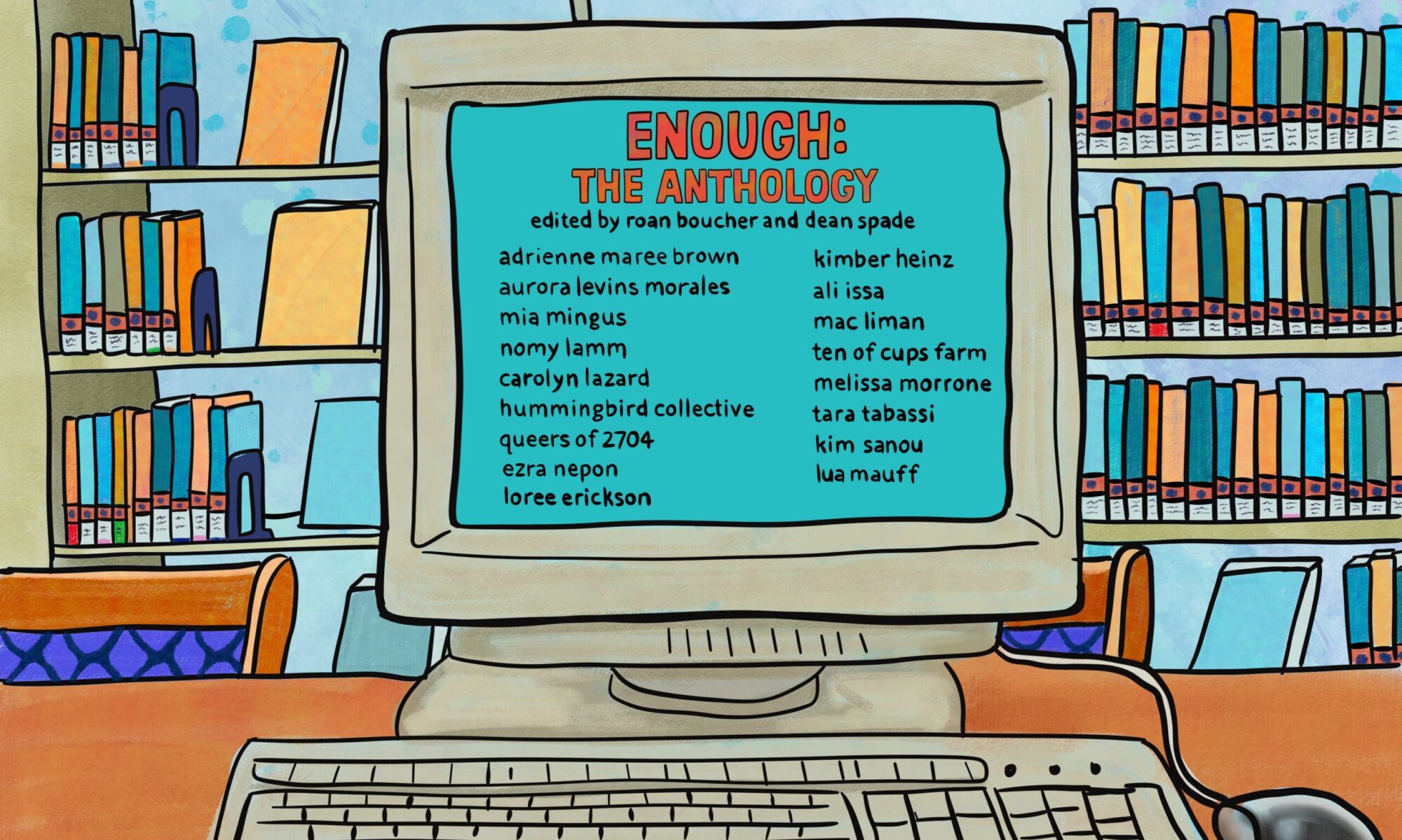
2024
Ten of Cups Farm is a Queer Family who seeks to be in emergent response to the Great Collapse. We have been in Love and practicing divinely inspired anti-capitalist choreography for over a decade. The steps are challenging. We are remembering how to be in bodies that belong to the Earth, and to Eachother, and to ourSelves. Always in tandem with unlearning of the individual-machine-body enforced by the inheritance of Colonial Capitalism. Each of us were drawn to the core beacon light of this shared dream from disparate paths. There is class disparity here, and a multiverse of gendered socializations, as well as upbringings in Catholicism, Atheism, Jewishness, Paganism and the religious myth of the amerikkkan dream. Among us are folks with careers, folks who don’t earn money, mystics, builders, artists, childbearers, non-childbearers, dragons, folks with depression, folks with anxiety, folks who hear voices, folks with neurodivergence, A+ students, rejects, golden children, black sheep, middle children, oldest children and the babies of the family.
We’ve had a lot of fights. We FIGHT together. Conflict is at the center of any dynamic creation. We all believe this and allow it to change us, over and over. We run many of our decisions through the values we chose to entrust. Generosity, Beauty, Love, Movement, Process, Stewardship, Togetherness, Candor, Transformation, and Complexity. Generosity as in, include yourself in the struggle for liberation, abandon what you learned about charity, and cultivate your gifts so that you can give them and remain energized. Beauty as in, radical beauty-making is a good response to the ugliness of oppression, queer adornment is an act of rebellion against our oppressors, and creativity is the antithesis of genocide. Love as in, gentleness sometimes and ferocity at others, as in, listening with the ears of your heart and being changed by your comrades. Movement as in not getting stuck, if something isn’t having the outcome that we are collectively striving for, try something new, and cultivate balance between rootedness and surrender. Process as in, speaking of surrender, there are only rare and brief moments of completion and buckle up because it IS the same dozen or so conversations for the rest of our lives. Observe what shifts and learn to love the cycles of return. Stewardship as in, we are collaborating with the more than human world, learn what makes each other feel safe and happy, and get good at it! Togetherness as in, we’re all in this together and it’s worth the time it takes to go at the pace where we feel our connectedness. Candor as in, say the unpopular thing, listen to the unpopular thing, praise the prophetic voice who challenges the status quo and cultivate an environment that cherishes the possibility of a liberatory Truth. Transformation as in experience time moving in all directions, practice dancing in polarities, reflect, be present, and vision toward the liberated future. Complexity as in cultivating a sense of wonder, re-learning the absolute necessity and grace of a thriving diverse ecosystem, and sinking into the life-long work of unraveling the sick and twisted knot of the white-supremacist-cis-hetero-colonial- capitalist- patriarchy. Woosh.
The six of us adults and our two kids are so grateful to the Táytnapam peoples who always have and still do steward the Lands we’ve called home for the past five years. Here, we are practicing ancestral skills, growing more and more of our own food, creating life and giving good deaths. We provide space for artists, madfolx, healers and organizers to create, go nuts, relax, regroup and whatever else they wish. In our newly painted pinky-purpley living room (the paint color was actually called “best friends”) we gathered around the fire, as we have so many times before to have this conversation. We passed around the recording device, took turns anchoring our 2 year old, let the dog in and out a million times and sunk into a few hours of reflection which we offer to you from our broken open hearts in hopes that our words and experiences will find anyone who needs them. Thank you for the generosity of your attention.
______________________________________________________________________________
Question 1: What principles or ideas motivated you all to come together to create your family and land project? Were there any other projects or groups you modeled parts of your ideas off or got inspiration from?
Silas: The first thing that’s coming to mind for me is the way that necessity was a huge inspiration and motivation for me to dream of and turn toward some kind of queer communal living because I grew up poor and in all of my young adult life was working a lot of jobs that weren’t securing a future of security for me.
I personally really struggled to find groups that were modeling anything that felt liveable and inviting and accessible to me.
Cait: As I approached having a child but even before that [I had a] feeling of not understanding how one was supposed to survive and be happy and fulfilled in the nuclear family model. My parents and other family members [were part ] of hippie communes and having been exposed to that way of living, as well as village life, as a kid growing up. Before we created Ten of Cups, I had been trying to form something similar with a different group of people. I saw firsthand how easily class divisions would lead to the poorer people being left out of the project and the richer people buying houses that they would then rent to the poorer folks. Watching those “radical” ideals get so easily swept aside in favor of what was easier for those with class privilege was part of what led me to the actual radical politicization of that vision and dream. I realized, oh no, this needs to be really, really queered and intentionally anticapitalist in order to actually include the people that I want to build my life with.
Bird: Some of the avenues that helped inspire me were Seattle-based organizations like Passages Northwest and Camp Ten Trees, which as a teenager became the first places I saw that queers could be in community with each other and consider it to be something like family. And then I sought out more actual land projects like Short Mountain Radical Fairy Sanctuary and IDA in the southern United States and saw some examples of that possibility happening, but didn’t gain a huge understanding of what their deeper structures were, or necessarily see them as exactly what I wanted. And I also explored people’s less queer, more land-based farming communities in Central America and saw and was inspired by indigenous practices there and people living in relationship with the land out of necessity. So many of the resources out there about “communal living” or “intentional communities” focused so much on the potential for failure, which always pissed me off. I knew we could create something beautiful and long lasting, especially if we approached it from a queer anti-capitalist decolonialist framework–aspects none of those resources ever talked about.
Silas: Most of us came with the idea that the earth is healing, and we wanted to live in a rural place closer to mountains, forests and rivers and be able to grow a lot of our food. But also to share that home and that space with people who need time and a place to step aside from their own chosen paths– whether that’s city life, institutions, academia, or if their lives are such that they’ve had to work in a corporate way or in food service or whatever type of thing that one might need to step aside from for a minute.
Bird: Some other principles that we chose to enact were trying to decolonize our ideals around what kinds of labor mattered or were valued, not forcing everyone to be in the workforce and allowing people to have really differing relationships to doing paid work based on our different class backgrounds, access to jobs or education levels.
We also have a commitment to unpacking every single thing, always choosing to go towards the difficult conversations even when we’re exhausted or tired or mad or sick of each other.
Silas: In order to do communal living we knew we must have a practice of doing shadow work, which I will briefly define here as the inner work of identifying our own unconscious material through recognizing what in the outer world is aggravating us, giving us a feeling of charge and learning more about the part of those external aggravators that are our own unmet needs or elements of ourselves that are being repressed and wanting expression. And in my opinion, the baseline reason we’ve ever lost a member or had a rupture, or people come close and then they’re like, nah that’s not for me, the baseline reason is being turned off by the amount of dedication we have to that conflict work.
Early on we had the idea: Okay, you guys, this is crazy, but what if we just did share all the money and all the debts? It took so much courage from each of us individually and as a collective to just experiment. Snake aka Mark Fleming, a mentor of ours, taught us: “everything is an experiment.”
Bird: Inheritance is evil. Debt is evil. Inheritance is a form of colonization that keeps the rich, rich and the poor, poor. Passing large amounts of money from parent to child and on is a way of hoarding money and is mostly done by white people, who got that money in the first place by violent practices. We know debt often comes from evil corporations that are benefiting from people’s poorness and is not a personal flaw or an individual’s responsibility. We knew we must talk about money constantly to have a liberated group of people who are sharing money.
Silas: All of us individually had personal practices of making reparations, so it was an immediate agreement of our early financial principles that because of all the reasons why we as white folks, even in our mixed class background-edness have access to more money, a lifelong goal and commitment of ours will be to give huge amounts of it to people who it has been stolen from, their ancestors, etc. Most especially Black American descendants of slaves and indigenous peoples of this continent.
Cait: We have a shared value around ways of knowing and magic and spirituality. That different ways of knowing are valued, centered and prioritized and not focusing too much on “intellectual book learning smart sounding” types of knowledge, but felt, intuitive, ancestral, other ways of knowing.
Mark: We all share a belief that we are witnessing some form of collapse, whether it’s the collapse of Global Capitalism or the environmental collapse. And yeah we’re afraid but also in love with the world and want to be even more in love with the world we know we could be in.
Question 2: What kinds of conversations about money did you have in the years you were initially planning?
Maggie: I came in with a lot of really fucked up notions, that will take the rest of my life to unpack and that’s why I was driven to come here as I had a feeling that this is wrong. And that didn’t mean that I came in prepared for all of the incredibly hard conversations that I was going to have. A lot of unpacking of ownership and attachment and bullshit concepts like charitable actions. There’s a lot of lip service paid to the idea of “What’s mine is yours and what’s yours is mine” and digging deeply into that and being like what does mine even mean and what does yours even mean and what the fuck and ownership is really messed up and it’s so deeply ingrained.
Sayer: Any time we wanted to take another logistical step towards finance sharing, like making a budget sheet for example, so many new conversations were sparked. I never would have had all the conversations. If it wasn’t for trying to do these things and having to ask, “Okay, how do we do this?”
The first iteration of money sharing that we did, wasn’t sharing money except that we opened a bank account together and started depositing money into it monthly. We each chose an amount that we were able to deposit based on our income and financial situations at the time, and we drew up a one page contract where we said “the thing about this account is that ownership over the money in it is not based on the amount of money that each individual person put into it, we all are equally owning this and it is for this project. And if people leave, they’re still putting this money towards this project right now.” And that was the level we were at and the agreement that we made at that time. I was in law school and unemployed, and I was putting $20 a month and it was from the student loans that I was getting.
Cait: Early on there were a lot of conversations based on people’s different class backgrounds, about how much different people had had to be frugal. That was one of the frequent, uncomfortable conversations: “oh, I don’t know how to spend less money. I don’t know how to indulge this particular thing.” Certainly shame came into play.
Maggie: At first, Bird, Silas, and I started sharing finances. At the time, I was working a part time remote job, Silas and Bird had a small amount of savings to live off and we realized it was the perfect time to start sharing our income and spending. there was a lot of grappling with the idea of what is a need and what is a want. We’ve traversed so much space and time and thought over that, now we believe needs are wants, wants are needs. But at that time I was coming together with people who had very different experiences of how to spend money, how to save or what we save for, what is necessary, what’s “unnecessary.” There was a lot of unpacking for me. Like I was saying before about the lip service and the bullshit mindset of charity that as the person whose name was on the paycheck that we were all receiving and we were agreeing we’re collectively receiving this money and we’re sharing it, there was a lot for me to confront, like my notions of entitlement or just being able to sink into the humility that comes with the truth that I don’t actually know what we should do with our money and I don’t know better than anyone else. There was a lot for me in there about pleasure, and realizing that I had a totally fractured relationship with pleasure, and had a lot of internalized shame and stigma that informed my beliefs about necessity. Also, just figuring out how to track our finances was a big thing and figuring out how to understand where the money was going and where it existed. Banks and software sure don’t make it easy for groups of adults to share money.
Silas: On the one hand, money and other resources that exist within the group need to be allotted where there is need and also with a whole group watching, it becomes more relevant for people to weigh in on what an individual might be needing. And I think there’s been a lot of taboo conversations and breaking down of cultural norms around privacy or individualist self care, that are totally related and have been really catalyzed by the fact that we’re sharing finances. Since it’s true that money is a tangible thing that we use for exchange inside of capitalism, but it is also such a big symbol for our resource, for our energy, and so witnessing and observing where it feels natural or inherent or easy to put money and then being like wait, why? Like why does it feel natural and easy and inherent to put money toward the mandatory health insurance of the people with paychecks, versus for example, the chiropractic or acupuncture care that somebody needs but we say we can’t afford it. And not that we’ve figured that out or cracked that code, but I think that it’s been a very formative and ongoing conversation to address the needs for wellbeing individually and collectively and how we meet those needs, with the multitudes of resources that we have, through the work of observing and challenging our preconceived notions about what is good or right to allot resource toward.
I’m just remembering an early conflict around Christmas presents and being in a community where there were some people who have experienced violence around Christmas time and experienced Christmas itself as a violent structure and idea. And then folks who were raised celebrating Christmas and who in their families of origin there were very practiced traditions of gift giving.
Bird: Yeah, we’ve had a lot of conversations about the ways that each of our classes were changing as we became one conglomerate financial entity. How some of us had a lot of loss of privilege and some of us gained privilege.
Cait: We also talked a lot about how we wanted to structure our reparations, what percentage we wanted to commit to giving and under what circumstances and to who, and that’s evolved over the years from, we’re going to do this percentage of giving to this kind of organization to being like fuck organizations actually, and shifting more mutual aid to individuals who we had or built relationships with. Anyway, we’ve [also] talked a lot about savings and retirement.
Silas: Sayer was the first person that I ever heard say: savings are unethical. We teased out the difference between unethical money hoarding and knowing how to meet our own needs, that includes putting money aside and not spending it?
Sayer: In our current system, we have different accounts for each of the things we’re saving for, so we’re not just hoarding money to have it. We have specific goals for each account. And we also move money to our community. We talked a lot in the early days about the energetic flow of money and not letting it be stagnant.
Maggie: When Silas mentioned the Christmas present conflict, I wanted to say that that was the beginning for me of a lot of process around differentiating from my family of origin that I know others of us share. Facing up to the expectations and the burdens that are put on us by people outside of this family and beginning to really identify with this family as our family, where our values are being generated and acted out; versus trying to uphold and fit into and still receive the privileges of fitting into the expectations outside of this group. And, that was the beginning of noticing, Wow, there’s so much differentiation that is going to be required to truly transform myself and transform my relationship to money and my relationship to family and people.
Bird: A lot of our financial conversations intertwined with our conversations about what it means to be a family. While we reject and generally disagree with heteronormative nuclear families, there is some way in which claiming that term has been a sort of reclaiming of the ways that we are often seen as less than and not validated as a true and actual family. Not a chosen family, just a family.
Silas: Not a “non-traditional family.” I’ve been really hating that one like yeah, what could be more traditional?
Sayer: When I was still living in Seattle, and I was a full time lawyer, and everyone else had moved out here and we were sharing money. I had a lot of strife and difficulty figuring out how to live my life in a way that made sense with all my friends from my job, who had their lawyer income, wanting to go out and eat food and go to bars and spend a lot of money and my hesitance and my fear to really presence my reality with them, which was that I had way less money than you. Even though we have the same job. Because I share my money with my family that doesn’t live here–six other people and two children, and I am going to move there when this job is done. At that time we talked about all the work that we do for each other that does not involve money that just makes our lives so much better. Like making dinner every night, it’s hard to exist out there by yourself and to have to fucking make dinner for yourself every night. And my life here on the farm is just so much easier in those ways. I finally had to choose between assimilating into lawyer culture, and telling them clearly, here’s the deal, we have the exact same job title and salary, but I have way less money than you and I want to hang out and I can’t do it in this way. I chose the latter.
Maggie: We talked about equality versus equity and not all having the exact same amount for everything because we have different needs and that’s good and fine.
Bird: Another huge subject of a conversation that we had was about protection and the idea of whether or not to have some sort of contract, or what kinds of agreements we were making. The conversation really started with the people who had the most class privilege wanting protection, so that they could essentially keep their privilege and not in some sort of unknown future lose their money that they still felt ownership over. But then it drastically shifted towards how do we protect the people who have the least class privilege in the case of any sort of dissolving or shifting of the relationships here, how do we protect them from being screwed and not having any sort of financial security.
Maggie: We really had to build a lot of trust with each other that existed off of paper. We also had to accept the reality that there’s nothing that’s going to totally protect us from the fact that who we are, what we’re doing and the way we’re choosing to live is not sanctioned by the overlords. And there’s no way that we can actually fit ourselves into their laws and their contracts that’s not going to be able to just be torn apart by anybody that has the most privilege and can go out there and get somebody professional to tear it apart. That’s just the reality. And so we spent a chunk of time just really trying to trust each other and not have it on paper. And then we went through a horribly traumatizing years long divorce with someone who came in with the most cash on hand and the most financial privilege and when he left us he tried to take us for everything we had, money and otherwise. As a cis passing white man, he was able to use the courts against us in what was essentially a witch hunt. It worked better for him than we could have even imagined. Long story short, we just barely survived it and have become even stronger as a family because of it. That experience also changed a lot about the ways we thought about protection and initiated a process of trying as hard as we could to create something that would fit within the laws of the overlords to prevent that from happening again.
Question 3: What arrangements have you made to share resources and to take responsibility for each other’s financial burdens?
Cait: So, big picture we have all of our money together in one bank account, actually many different accounts where we keep our reparations, money for savings for whatever big thing(s) we’re saving up for. We also each have individual bank accounts where we put our “personal money.” And we have a shared mortgage on our home that was sort of strategically choiceful about who was on the mortgage, and different people who are on the title of the home. Those arrangements were made based on who could be on there so we would actually qualify for a mortgage and while also wanting to have the broadest ownership possible, so that anything that we actually do own on paper can be as legally shared amongst as many people as possible, though it has not been possible for it to be legally shared amongst everybody. There isn’t really a legal way to share debt, but we do also share all of our debt and we have different strategies about how we deal with different debt. We’ve paid off some debts. Others we have not.
Maggie: There is no legal way for us to function and be recognized as the family that we are in the country that we live in with the dominating government that we have. We can’t legally exist as a family. I want to share with anyone who wants to pursue the kind of life that we are living, because I believe that it is good and right, the strategies that we use, and it’s not clear cut and it’s also risky for us to fully share in a lot of ways and if we had the option to legally join and marry under the laws of the land, then our financial security would be a lot easier for us to navigate. Our health insurance and our homeowners insurance and our car insurance and our flood insurance and our debts and our bank accounts–all these things are a constant dance of trying to do what we can to operate as “individuals” or certain subsets of people who are legally married, when it just doesn’t reflect our reality at all. It’s a type of really intense discrimination that we face. We have to hang up on a lot of customer service representatives when we reach points where the person we’re talking to is just so confused and can’t help us anymore and we just have to start again, and hope for somebody a little bit more open minded–it really sucks. And it’s like, funny haha, but also it puts us in an extremely precarious position where we just don’t have any legal protections and we can’t access them.
Sayer: In regards to sharing resources, there are many kinds that we value. Cait and I work in money making jobs that are in professional fields. And we have done a lot of work to constantly ask the question: “what are all the other kinds of work that make our life so beautiful, that are invisibilized or undervalued.” For example, all of the farm work, the work in the house, making food and raising children, emotional labor, spiritual labor. Figuring out our systems for sharing those resources has been such a process with so many iterations: more meetings, less meetings, different weekly structures, abolishing the week altogether and doing 10 day cycles–we’ve tried it all. I get to eat a delicious and nutritious meal every night and I make dinner about once a week. And we have a garden that’s so beautiful and the source of so much abundance and fresh, nutritious and delicious food and also the source of so much spiritual and relationship work that’s deeply enriching to our lives.
Cait: In the same way that money is fully shared amongst all of us, how we allocate our time is also collectively held, so someone else can put something in the calendar for you and say, on this day you’re moving the fridge for example, after this meeting. Something that Silas initially observed was that as we unspelled some of our capitalist attachments to money and material possessions, a lot of that energy transferred over to time–how we manage our time resources, how to balance time spent for the collective versus personal time that no one else has a say about–it’s all been part of the process.
Maggie: We are in an ongoing process to be able to truly sense and respond to one another’s needs. An aspect of relearning our inherent belonging to the Earth is learning how to be an ecosystem, and a functional part of one that involves not just human beings. But even within just our human community, with one another, we are in a process of relearning to be sensitive, observant, and interdependent enough to sense, hear, and respond to one another’s needs in a way that reflects what our personal resources are, our capacities are at that moment in time, and the needs of the whole group and the needs of each individual. And that is very much still an alive process. And I think it always will be. I see how much we’ve grown but we really are in a point right now about refocusing and looking at our resource distribution as a family in terms of energy, and where it’s being disproportionately allocated, where we have incredible need and how to respond to that in a natural, organic and emergent way.
I could say one more thing about the logistical side of money, which is that it can be a nightmare with this many people. We’ve tried so many different solutions, and the more we can reach out to and find and build relationships with others who are living in similar ways, I feel excited about the possibilities of learning from one another. And there are always times where we’re like, man, if we could create a software that would combine everything that we had known about how to budget and how to spend and what to do with all these systems that are so disconnected from each other and just literally built to confuse you, we could really share this as a resource with others.
Sayer: One of our main arrangements for sharing resources is we have a group of us who are the Budgeteers and a group of us who are the Fine Nancy’s aka finance group. Currently, and for a little while, Bird, Marky, and I have been the budget realmie. In the Budget Realmie, we track monthly income and spending, and create monthly budget sheets. The Finance Realmie deals with long term planning, savings pots and goals. The Budgeteers let the Nancies know how much we have left over in a month (if any) and the Nancies distribute that money amongst the pots based on our goals. Some examples of those pots are: home repairs, emergencies, health, etc.
Cait: The reparations come out first, so even in months when we’ve been in the red, we still pay reparations. The percentage has shifted a little bit over time depending on if we’re really struggling or not but it’s always somewhere between 10 and 20 percent.
Maggie: We started with doing all of our budgets in *oogle *heets and over the years we picked up Mint which is a budgeting and tracking software which is definitely not without its flaws. Now we use a combination of *oogle *heets and we just switched to Monarch budgeting software and we also use QuickBooks.
Question 4: What have been the sticky questions that remain unclear or that you’ve tried different experiments about?
Silas: The stickiest question of all and not even because it was like the most conflictual or political or highest stakes, but it just remained sticky for a long time was “what is personal money.” And it’s also something we tried, a lot of experiments around even if they were thought experiments. Our monthly budget spreads out all these areas of spending that our collective agrees needs to happen regularly. And for most of our time together as a family that has been pretty tight and we’ve been sort of mostly able to meet those needs that we agree as a collective are our collective needs and maintain our commitments to reparations and land back and mutual aid. And occasionally, although increasingly so, we have been allotted chunks of money that get sent to our personal bank accounts. And wow, so much strife around that: some people really struggling with spending it at all, a lot of scarcity or a feeling of: I just have to hang on to this. Some people spending it with ease and then running out. There is a lot of overlap with the what are wants and needs conversation because some people were or are more accustomed to spending cash on their physical and mental health needs and so would be more drawn to doing that. While other people who were more accustomed to having those things covered by either insurance or other family members, would not be getting those things for themselves with their personal money out of a feeling that they need to save this for strictly frivolous pleasurable things. But then the question arises: What do I even want? Here I am now and my “basic needs” are being met by the collective budget, and I have this cash on the side, so what do I spend it on?
Maggie: There’s just so much material available here in this question. And it shows many aspects of privilege. For example, if you’re a person who has chronic illness or chronic pain, and you’re using your personal money to pay for the health care that you need, and another person does not have any chronic illnesses or chronic pain and is using all their personal money to just buy things that feel pleasurable that they want on top of everything else. Again, referring back to that thing about equality versus equity. That informs us about where we need to move and shift even further.
Another sticky question from the days of yore is “how much fuck the cops.” Which was a catchall phrase for basically anything government or dominant paradigm related. We did all come in with varying levels of understanding about how corrupt the systems are that we interact with and what our responsibilities, our needs based on our social location, and our values around subverting those systems, denying those systems, and threatening those systems are. And we have evolved into more togetherness on that but especially at the very beginning I remember “how much fuck the cops” could even stop a meeting, because we would come to a point where there was way too much dissonance in our beliefs, our experience, and our willingness to challenge systems and threaten systems to even keep this conversation going right now.
Silas: “How much fuck the cops” really influenced every aspect of our lives. Going back to the early days of contract making, it was a big part of identifying the reality that some of the early inclinations towards a contract were to protect the hoarded wealth of those who already had it. And when the question and quotes emerged, it was just kind of a helpful– we have many of these now–sound bite to pause and mention: “in this conversation, I’m feeling the how much fuck the cops question.” As we started to formulate some of our plans about how we could impact actual change on the lives of the people within our community, meaning securing more people’s livelihood, future and possible safety and well being, as well as moving some of our money in directions that were aligned with our mutual aid values, we had to recognize that we were coming into territory where the systems weren’t currently in place to support our beliefs and our actions. Depending on how we maneuvered through them, there were places where we could be in danger of being reprimanded or getting in trouble. And for some people, especially the people with more class privilege, and more patterned conformity and willingness to go along, and stakes in the status quo, it was really challenging to imagine breaking rules or stepping outside of normative expectations. So how much fuck the cops in a financial way, came to really represent: how much are we as a collective willing to actually, physically do the things with our actual money and our names that will ensure the most radical collective healing and well-being, despite what is in place systematically for us to be validated, recognized, or approaching things in a legal way?
Maggie: Even among supposedly very radical communities out there, my experience is that there’s still a lot of power in the lie that it’s possible to cooperate with all of the systems of oppression that we live under, and still be radical or still pursue the most true and right shining abundant reality that we are trying to go for. And we had to work out a lot of kinks to be in shared opinion about that.
Silas: After all these years of asking the question “how much fuck the cops” the stickiness has really gone away and those who have stuck it out are really on the same page now about what the answer is: “a whole helluva lot…one hundred percent actually”
Another area of stickiness has to do with inherited wealth, and the wealth that is available in some of our families of origin and the conversations that are needed to be had with those families of origin. Some of whom have come to value and respect us as a family to varying degrees, and some who feel open and inclined to treat everyone in this household as a partner to their offspring. But that’s been sticky and it puts a lot of pressure on the offspring of those parents who have money and resources to share to be having a lot of really hard conversations.
Maggie: The tension with families of origin and wealth feels like it’s on the outside of us in a way that we get stuck to, that prevents us from moving toward each other. But when we are able to move toward each other, it feels less tense, and it feels more like we are united in a way that can bolster us to spread those conversations further. I want to acknowledge how scary that is, not just among our families of origin, but just speaking out. We have had experiences of violence against us that have really impacted our voices and our abilities to share and speak out about what we’re doing, what we believe. And as it relates to these conversations with family of origin, it’s a big deal to come out and say I’m going in a completely different direction. I’m going in a direction that threatens everything that I have been taught and threatens things that people who are close to me hold valuable. Right now we’re in a stage of feeling less sticky in our inner core but more afraid when we try to push outward and spread and share and just be ourselves out there.
Silas: There is a huge sticky conversation that has to do with our family planning and the reality that we have a complex relationship to incredible abundance and security as well as limitations and scarcity. We’ve always had the plan to build another house on the land here for Bird and I to live in to open more space in this main house, especially for the children that are going to come and continue to be born into this family. And we’re extremely financially limited largely because of some of that violence that we’ve incurred systemically through that time we talked about, and because of the reality of our financial limitations. In the process of family planning, we’re trying to do the work of prioritizing the different needs, wants, and desired timelines. Weighing the costs, whether they be money or labors: emotional, physical, and spiritual of building a new house, versus having another baby. So much is required of both of those processes, and we’re doing our best to not have them be pitted against each other.
Question 5: What does maintenance of the financial part of your relationships look like? You mentioned having many retreats about finances. Can you say more about what kinds of topics those have covered or what methods you’ve used to work things out?
Silas: Since 2019, we have had yearly Finance Concentrations, which tend to be a long weekend where we sit in all day sessions together and we share the work of facilitation. In the weeks leading up we’re asking ourselves, what’s up financially right now? What do we need to talk about, process, grieve, learn more about, make plans about? Then we create an overall structure of sessions, usually four or five a day, and go through those things. Some examples of sessions:
- Value, Contribution, and Division of Labor AKA Web of Support
- Gender, Relationship, Family Structure and Power
- Insurance, Savings and Retirement
- Reflecting on and Visioning about Mutual Aid/Reparations
- Presencing Ourselves with the Interdependence of This Land
One thing I want to talk about is the more psycho-spiritual aspect of things that we tend to work on, whether it is opening space for grief, whether it’s utilizing techniques of dream work or process work. We use these more mythopoetic and dreamy psychospiritual techniques to presence the raw materials in each individual and then allow them to enter the collective field where we’re able to work those energies as a group through various embodiment practices. This has been a big part of the really necessary processing of concepts, ideas, beliefs, and attitudes that live in our cellular bodies, and being able to express and move through a lot of the inherited curses of capitalism and white supremacy and everything that we’re desiring to subvert.
Maggie: Another important aspect of the concentrations is them being an opportunity for cultivating deeper trust in one another to see and name what is underlying any type of process or conflict. Especially, across the strata of class privilege, being able to cultivate a really deep and boundless trust in one another, and those of us who have experienced more oppression and violence
Silas: In regards to the trust, we have learned to trust the most oppressed voices in the conversation that is about the specific system of oppression. And around finances and class that’s been such a powerful and potent thing, because it means that the folks who are more accustomed to being the smartest and the most relied upon and trusted voices in the room have to go through the removing of the layers. Because we can say cultivate trust, but that actually also means really recognizing where there isn’t trust and recognizing why.
Sayer: That leads me to one aspect of that, which is shame and self worth. I am remembering conversations we’ve had about classism where Silas really invited us to ground into our self worth, into our belonging to the earth. Because one of the big things that has come up for those of us from more wealth is when we begin unlearning our classism and entitlement, there is a lot of shame. And part of that is because our sense of worth came from a sense of superiority. And so when we unlearn that superiority, then we’re like, oh, wait, am I the worst? Do I have value? And sourcing that value from somewhere else was a really important part of the relationship work that we’ve done to be able to show up in conversations in whole ways. Instead of just oscillating quickly between superiority and total shame and lack of self worth.
Maggie: Thanks, Sayer, because that also jogs something for me about this concept of trust too. It’s like, who should be trusted is totally twisted and flipped by patriarchal capitalism. And the part of the superiority is a feeling of like, of course, I am trusted and I should be trusted and everyone around me should trust me. When in reality, anyone who’s coming in with privilege that’s based on a dominant violent system of oppression is the least trustworthy. And I had an experience very early on before we even started fully sharing our finances where I was talking with an extended family member who said “I’m so concerned about what you’re doing and how are you going to protect yourself from, [basically what was implied was] these mischievous freeloaders that are going to try to take all your money away.” I was being told, beware, poor people are threats to you. But actually, I’m a threat to them. There was this metaphor spoken of wolves and sheep but I am 100% the wolf in this situation. That needs to be understood, and it really is not. I feel like what goes wrong a lot of the time is when people are like, “Oh, I would never harm anyone, I would never wield my privilege against another.” And a part of the way to actually stop those within my DNA body, the rushing course of violent legacy that’s behind me and my ancestry and the power that’s needed to actually stop it in its tracks is being like, “Oh, I could, and I will not.” Versus denying and sidestepping the untrustworthiness that goes back and back and back and back. And back.
Silas: I also think that maintenance of the financial part of our relationships looks like tending to each other’s well being and being aware of the ways that each other need to be cared for and need to be met in both their suffering and in their thriving and taking it upon ourselves individually and collectively to fund each other one way or another.
Sayer: I want to presence something fun, which is the registries. We all have gift registries. Silas one time was like, I’m making a gift registry, everyone should make one, it’s so fun. And now part of our culture is that we all have gift registries and it’s been really nice for people’s birthdays definitely, but also if you want to show somebody some love, somebody’s having a hard time or you were thoughtless to someone and you want to give them a little gift as a sorry, or somebody did something really nice for you and you want to give them a little gift as a thank you. We also have one for the whole family and it has been an interesting experiment in exchange. When we have longer term visitors who ask if they can give us some money for groceries we tell them about our family gift registry. It has been a really fun element of our financial relationships.
Question 6: Are there things you have learned about work and money that you think might be useful for others interested in similar experiments?
Mark: I have learned that capitalism is bad and it taught me bad things about myself and what life can be like. I’ve been reflecting recently on how in my entire life of jobs and work before I moved here, I never once had a job with a chair or where sitting down was an option. And I can feel the part of me that thinks that’s cool and it feels really related to a part of my experience that I’ve been seeing more and more clearly the more time i spend here, which is how much of my worth and dignity I wrap up in what I’m able to do or what the outcomes of my labors are. How hard for me to think that it’s worth my while to have a rest day or have a day spent in cultivating my beautiful inner landscape. I really like doing stuff in the tangible, physical realms, I like to fix stuff and make stuff and I really like DIY. And my endeavors or my labors or the collective endeavors that I hold leadership around are things that are very obvious and visible. It’s a stack of firewood. It’s a physical structure or a vehicle that stops, things where anyone can show up and say, “Wow, look at that.” And that’s not true of a lot of different kinds of labor, whether it’s the spiritual visioning, spiritual guidance, the deep emotional labor that is the backbone of our ability to function and wake up in the morning. The stuff that I do is stuff that capitalism is good at quantifying and are things that people are accustomed to interacting with within capitalism.
I’m one of the people that lives here and does not have a j-o-b out there in the world generating income, which is great, because I’ve always been pretty bad at that. I noticed that for a while being here and trying to explain to people what my life is like, I would always say something like, “yeah, I don’t have a job but I save us a lot of money” or “I don’t generate us income, but I do a lot of stuff that keeps us from needing to pay someone else to do it.” This was a way to try and prove my worth via capitalism… but recently I’ve just stopped doing that. When people see or compliment the fruits of my labor here, I feel like I really receive it because I believe that what I do is beautiful and worthy of celebration. And I also really try to turn people’s attention towards the collective everything that is required in order for anything here to happen or to exist.
Cait: I want to speak to a specific subset of possible readers of this, who are people from privileged class backgrounds, which I am, and people who continue to work for money while doing the work of unspelling capitalism especially in highly societally-respected white collar kinds of work. We’re the ones who have a lot of the money and it would be really cool if more of us gave away more of that money. So as I’ve been thinking about what I’ve learned, I mostly want to give a pep talk to all the rich white collar workers out there. And I think the things that I’ve learned, one of the big ones Sayer already spoke to around superiority, entitlement and self worth. I learned I have to find my self worth in other places.
Another thing is about how much nicer it is to give away your money than to hold on to it… it just feels better. Especially in the process of building the relationships where that is really meaningful. Really deepening, deepening, deepening the understanding that when I say “your” money, the your is in such big quote marks. Just like it’s not your money, it never was your money, it’s still not your money. Which doesn’t mean you’re not working hard for it. And that is a separate issue. And the reason my work is valued in the way that it is, my particular kind of white collar trade of psychiatry, is not because it’s that awesome. It’s because the AMA, which is basically a slave owning organization, lobbied the government over and over and over to keep doctors rich. And insurance companies lobby. You know, it’s not you. You’re not the reason you have a lot of money even though you work hard. And when you have that money and you just have it and you’re holding on to it, it is poisonous. It’s poisonous money. And you can take the poison out of it by letting it move and breathe and be free and be redistributed. And it just feels better. You will feel better, you will feel better.
The other thing [I’ve learned] is about the real costs to yourself of continuing to interact with paid work and with whatever governmental or business or institutions and cultural norms and things that you have to interact with, in order to continue to do work for money. They come with a toll and it’s really easy to take that toll on you and to use that to feed the sense of superiority or of deservingness. Don’t do that. Capitalist labor is very individualized– it’s not a thing where multiple people have one job, which is not true outside of capitalism. Outside of capitalism, we all have the same job, or we have a lot of overlapping jobs. And within capitalism, it’s this very individual thing where one person has one work that they do and they receive the money for the one work that they do. And it’s easy to get sucked into that, or trapped in that mindset. And that can really be wiggled loose a lot. So just think about all the ways that you can, even as you’re one person doing your one job, collectivize the impact and ease the impact of still having to engage with capitalism. Learn to ask for help. I get a lot of help for my mental health, which is impacted by having to do some of the stupid shit I have to do. I get practical help with doing the administrative stuff, get material help with making my office a nice place that doesn’t suck to be in. Bringing that collectivist attitude to this very individualized paradigm can really ease the way a lot.
Silas: And on the other side of the spectrum, I’m thinking about my experience as a person who grew up poor and in my early adult life worked so many jobs with no chairs. Currently, I’m a person who is also not collecting very serious, meaningful income for most of the work that I do. It’s an ongoing and living process to do the beautiful untangling of working in ways that are nourishing and providing for myself and my family while honoring the limitations of my body and my needs for rest and pleasure. It goes in all directions. For example, I have learned and grown into (and there’s still more growing to do) around recognizing how much of my work I find pleasurable, and releasing the attitude of: I’ve been working all day so that I could prove that I’ve been contributing. When my truth is I’ve had a really great day doing what I was doing with myself and my body. And that requires collective participation too because I need my people to recognize the work I do as work whether or not I’m enjoying it.
Another direction is in our family’s ongoing abolishing of Gregorian time. I’m asking myself: if I don’t have a weekend, when am I working and when am I resting? I’ve gotten to the point of queering my lifestyle in a way where everything could be work and everything could be rest and everything could be recreational. In this family I have the opportunity to explore or observe the larger rhythms or the larger waves and seasons of productivity or not productivity. This makes me think of tough conversations along the way where we’ve been trying to harness a good and healthy harmony around upholding one of the anti-capitalist attitudes that is: productivity is not the end-all be-all of our daily life. We want to challenge and threaten any systems that say produce, produce, produce. But it’s a slippery slope of needing to recognize when any one of us might be leaning on any of our values in a way that’s actually avoiding growth, necessary labor, change, movement, whatever it is. In this family, in this life, there’s so much more room to deepen into the complexities of all of our values instead of maintaining a surface level engagement with them.
Circling back, as a person who doesn’t make money for a living and who has for 12 years been in these relationships of love and conflict with people who all come from class backgrounds of way more access to wealth and way more privilege than mine, a huge real struggle for me has been ever not working. Because I feel like I have to prove that I’m a contributor and that I have value in the family because there’s no money coming in from my biological family. There never will be. If anything, there will be the opposite and I will need or want to put money towards my biological family. And I don’t have an income earning potential, so if you want me to get out there and go to work, I will make minimum wage. The discovery of how stupid that is, when I exist in this family with people who have the potential to earn an income that can sustain a family this large, the visceral realization of how stupid it is to be forced to put your body on the line and the types of labor that are out there for minimum wage, it’s just so offensive. And in the context of our family, the amount of money that I could bring in is so much less than what my contributions could be if my time were not spent at a job that paid me that money. I know that but I have needed and still need, less and less frequently though, the reassurance from my family members that I am contributing in big and meaningful ways. It’s just a really interesting spectrum, slash circle, between the different class backgrounds where we all actually are wounded in the same way by capitalism and the wound at the core is the same. And it’s like, Am I worthy? Do I belong? Am I good enough? Am I doing enough? And just the way that it gets triggered or expressed I think is different.
Resources that have deeply influenced us over the years:
- The Unlikely Peace at Cuchumaquic by Martín Prechtel
- Emergent Strategy by adrienne maree brown
- Stay and Fight by madeline ffitch
- The Fifth Sacred Thing by Starhawk
- Faggots and their Friends Between Revolutions by Larry Mitchell and Ned Asta
- Dune by Frank Herbert
- Conflict is Not Abuse by Sarah Schulman
- The Gift by Lewis Hyde
- all of Octavia Butler’s work
Also, Rain Crowe, who is an educating witch that has supported me and us so much in our practice of holding our European descent and decolonizing movement work stuff. Our mentors at Northwest Soulquest, Anne and Sheila; Emmy Smith-Stewart and Jeffrey Aczevedo’s plays; the more radical aspects of Jewish tradition that are inherently anti-capitalist and earth based; Adamah; The Icarus Project; Fever Ray and The Knife; DakhaBrakha, mad resistance movement; Short Mountain radical faery sanctuary, Soteria house; student cooperative organizing; living in Sherwood co-op and doing co-op life.