Originally written in 2012 with an afterword added in 2023
Mac Liman
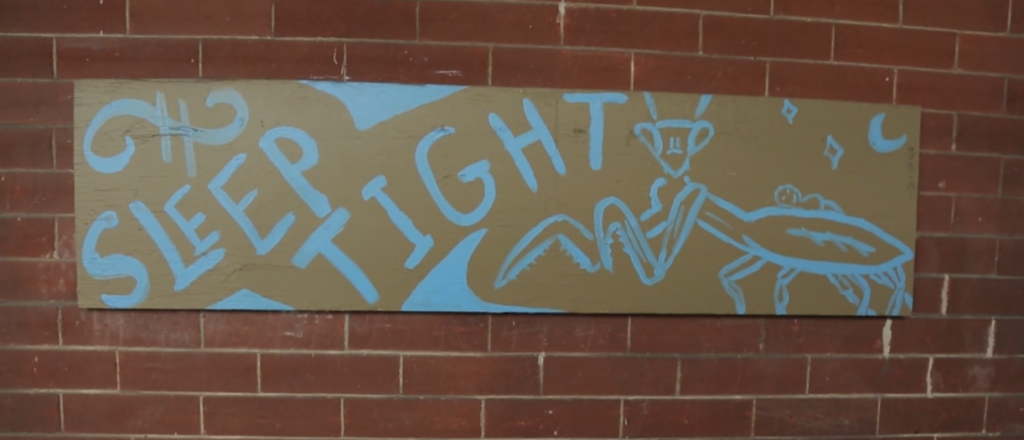
Sleeptight Bug drawings by @aayjah.art
Living with others always seemed like a good idea to me. It makes sense to share resources. It may be extravagant for me to have my very own juicer and dehydrator, but if I live in a house full of friends, what better way is there to process an entire crate of dumpstered apples than to juice and dehydrate them? An art project or puzzle will monopolize most of a small apartment, but in a giant shared house I can afford to have a table or even an entire room dedicated to crafts. It’s cheaper and less wasteful to buy in bulk. It’s fun and practical to drop an invite at one house to invite ten friends to dinner. Watering the garden is easier if the task is split seven ways. And most importantly, if I live with others I am less likely to feel alone. I grew up white and wealthy in houses that were so large that my family members couldn’t hear each other even when we were all at home. But living communally, even if I am sick in bed for several days or stuck in a set schedule, I get to interact with others, hear their stories from the big world, and always have someone to ask for help – even if I am terrified to actually ask for it. I can have a fuller life with more options if I share space with others. And so I have never lived alone.
Today I live in an eleven bedroom duplex in downtown Denver that I purchased with my dad’s money. My nine beloved housemates and I share two kitchens, four bathrooms, food, a large yard, garden and chicken coop, the expense of utilities, taxes, insurance and construction projects, and the mortgage payments that we send to my dad each month. This is the Sleeptight house.

Our idea to buy community space surfaced in 2005, three years before any property was purchased. I had been living in a community punk house with 6-9 housemates, miscellaneous animals and traveling kids, a Food Not Bombs chapter and our local bicycle co-op. The house faced implosion on a fairly regular basis as our flaky landlord cooked up new get-rich-quick schemes, the City cracked down on zoning violations, the FBI raided the house as part of an activist suppression campaign (🡨that really happened), and the daily stress of keeping the space safe and clean pushed inhabitants to our physical and emotional limits. It was magical in many ways and I needed something more stable.
The core group with the greatest interest in making changes in this particular house were white, class-privileged women who had grown up together in Denver. While my dad with his two houses, four cars and an airplane represented the largest concentration of wealth privilege, all of us had grown up in houses that our families owned. And although there was a fair amount of class privilege denial and hiding in our activist community, there had also been inspiring examples of people honestly sharing their access. Housemates used holiday gift money to purchase tools for the bike shop, talked openly about investing college fund money in microloans in Nicaragua, borrowed family vehicles to share rides, and made sure that everyone in the community knew that a personal inheritance could be used by anyone for an abortion or bond money. These practices laid the groundwork for us to start thinking about and researching how to buy a house. A couple years and community-house-incarnations later, our landlord told us that he would not renew our lease in spite of the work we had put into building a garden and repairing the space, and it seemed possible — or at least worth an attempt — to formally try to buy something.
Our original plan — inspired by dozens of existing co-ops and land projects, collective living elders, social justice activists, lawyers, and realtors — was for my dad to front the money to buy a house. We would fix it up and then he would quitclaim the house to a Limited Liability Company (LLC) where housemates are the member/owners. Then the LLC would get a bank loan to pay off my dad (using the house as collateral) and continue paying the bank mortgage. Member/owners would have the option to buy in and out of the LLC over time so that some of the money they put in could leave with them, and we would potentially be able to refinance periodically (every five years or so) to take out money to share with each other, create an emergency fund to help neighbors fend off foreclosure, invest in other community ownership projects, and/or give away. The founders would make a “manageable” three-year commitment and there would always be clear ways for people to enter and exit the arrangement. Also, there would be options for people to merely rent if they were not interested in owning, or sublet if they wanted to own but still travel. Simple, right?
Four years later in 2012, very little of this plan was actualized. None of the original people ended up owning the house. And of the group of seven who were involved when it was purchased, only three of us fulfilled our three-year commitment. (Two of us are still here.) The house is not owned by the community or an LLC. I am the sole person on the title — which also was something we never hoped would happen — and my dad is still the lender.
Don’t get me wrong; there have also been tremendous accomplishments, both personal and logistical. In 2007, my dad offered to use some of his money to help me buy a house but he was explicitly against buying property that I would share with others in any way. In 2008, he bought this house knowing that I would be splitting responsibility, liability and all benefits with my friends. This change of heart was the result of months of debates, tearful fights and inviting him into my life in ways that neither of us had ever wanted or expected. My communitarian, activisty lifestyle and values are often at odds with my dad’s choices and beliefs. I spent a lot of years projecting my fight against “the man” directly onto my rich, straight, white, Jewish, baby boomer, conservative, ‘rah rah free market capitalism’ dad. Becoming open enough to understand where our interests meet (he wants to use his resources to help me be stable and happy; sharing my access with others brings me stability and happiness) and to work together has been a challenging and incredibly rewarding process.
From 2008 to 2012, nineteen different people lived at Sleeptight, most of them very happily, with partners, children, pregnancy, illness, beauty, and adventure. The group includes new Denverites, travelers, old friends, community house novices, and collective living experts. We *mostly* finished three massive construction projects where housemates completed hundreds of hours of work and also paid contractors over $70,000. We planned for, budgeted and then borrowed that money from my dad and also from a City loan program for first-time and/or low-income homeowners. The house was transformed from having no functional plumbing or electricity to being livable – comfortable even – and compliant with building code. The 1500 sq feet back yard was paved with asphalt when we moved in, but now is full of chickens, garden beds and healthy, remediated soil. Most of us lived in this neighborhood for many years before we purchased the house and we have been able to honor our promise to be here for the long-term. We moved onto our block with the commitment to listen to the families, businesses and institutions that were here before us, to maintain relationships, to be visible and accessible, and to follow our working class Chicano neighbors especially in their fights against police brutality and for a fair share of public investment. The house allows us to live inexpensively in growing downtown Denver, enabling all of us to do many things with our time and money that would not have otherwise been possible. With low monthly expenses, housemates have paid off debt, sent money home to family, left abusive jobs, chosen lower-paying but higher-satisfaction work, pursued education, traveled, made art, rested, and healed – options usually only available to the wealthy in our culture. The house has earned a reputation of being stable — both in day-to-day lifestyle and also as a landmark and resource that can be depended on to last. While we have not yet been able to share home equity, the larger community has been able to use the house to receive mail at an established address, borrow tools, stock emergency preparedness gear, register for parole or use as proof of residency, store belongings, park vehicles, hold meetings and events, use as a rental reference, provide childcare, and share food. And Sleeptight is still a place I am excited to invite people into, and where I want to live.
The failure (so far) to realize collective ownership however, is a source of fear and disappointment for me. I worry that a tense landlord power dynamic will hang over me forever, that the failure to transfer ownership will be interpreted as selfish or controlling, that I will die and my housemates will have no legal rights to the house, or that our goals were too lofty for people raised in this culture dominated by capitalism, hoarding and distrust. But my housemates tell me that they do not carry these fears or disappointment as much as I do. Some of them still want to patiently work towards collective ownership with me even (with varying degrees of hopefulness). Some are not interested. And most housemates who recently joined the project are either unattached to Denver or aren’t yet close enough to this group to make a commitment to own property together. I must admit these are good reasons to opt out of collective homeownership. And ultimately, it’s probably appropriate that I – the rich kid – put more energy than others into keeping an eye on and addressing my own class privilege.
There have been plenty of uncomfortable or angry feelings about me owning the house, though — and about decisions made by me, my dad, and previous housemates. But most of the big fights and difficult struggles we have been through at Sleeptight had less to do with our steps toward and away from collective homeownership, and more to do with the general trials and tribulations of collective living, and I believe our openness about class and classism made many of those common trials easier to surmount.
Sleeptight housemates have a wide range of class backgrounds. Among the majority white residents, we represent a wide range of ages, genders, sexualities and abilities, but our class experiences have been the most diverse and dynamic. I think this is possible because the introduction to the house calls out class immediately. We ask that housemates be “more than just roommates” and, vague as it is, be “in it for more than just the cheap rent.” As part of that, the first thing a new housemate learns about Sleeptight is that it is connected to my class privilege and is part of a process of figuring out ways to share and redistribute resources. Discussions of class dynamics in the house, how to use common funds and shared income, the contributions that are required and requested of housemates, and where we sit in the context of a gentrifying neighborhood are all topics continually on the table. I have never lived in a place where class is so central to our daily discussions (and I LOVE it). At previous community houses, attempts to figure out why a housemate is late to or absent from house work days may have degenerated into shaming or only look deep enough to analyze gender dynamics. At Sleeptight, a repeated absence initiates a conversation about how we each developed a “work ethic” in our lives and how we want our contributions to be valued and appreciated specifically because of our class. In my case, being raised rich has meant artificially creating non-monetary value and worth for my work because there was not an urgent need for money in my family. As a result, I find that a verbal “thank you” sometimes feels more important to me than a wage. Chad, raised middle-class, says he feels highly motivated by having a schedule, deadlines and even evaluation of some kind. Chris, raised working class, wants to put his own personal money into a project in order to feel ownership over it. And for Dave, a housemate who was raised poor, anything that too-closely resembles working for others can feel depressing or oppressive. His dad is a plumber whose endless work hours, diminishing benefits and perpetual lay-offs damaged his hands, back, and relationships. To keep rent low for his family, Dave’s dad often traded home repairs to their landlord. In my family’s custom-built home, my parents hired out all the housework quickly and quietly; repairs to men and the cleaning to women. When the sink becomes clogged at Sleeptight, I am often excited and empowered by the experience of using tools and fixing the problem on my own – especially with salvaged parts and a DIY manual. For Dave, climbing under the kitchen sink understandably feels very different. Sad, even. If we didn’t know this about each other, Dave’s hesitance to unclog the drain could be perceived as non-contributing where my enthusiasm would be unfairly rewarded. Because we talk, we can find positive ways to combine his skills and my eagerness.
I would like to think that the diversity of class experience in the house helps us to make clearer decisions about money. In addition to splitting the mortgage we pay to my dad, property taxes and insurance that is paid annually, and our monthly utilities, we all also pay into three savings funds each month: Construction Fund, Emergency Fund and Food Fund. Individual contributions are small enough that no one has needed to modify their contribution in an ongoing way due to loss of income or higher personal expenses because of classism or racism, but we practice talking about money and class often enough that we feel (humbly) confident we can come up with a flexible solution when the time comes.
Construction Fund money is collected to finance actual construction (drywall, joint compound, tools, hiring experts, etc) and the cost of ongoing projects around the house such as seeds for the garden, furnace filters, shelves for the basement, batteries for smoke alarms, bike grease, etc.
Emergency Fund money acts as a safety net for the house. It is used as a grant for situations where we all are in need of the cash (to replace the hot water heater that sprung a leak, subsidize a huge heating bill in months when there are fewer housemates, pay fines from the City if we get caught with unpermitted chickens), or as a loan for individual housemates in an emergency. Emergency is defined as “something that will prevent a housemate from participating in the house if they don’t get the money.” It has been loaned to housemates to pay rent in times of unexpected unemployment, finance a car repair, and help with medical or family emergencies. No one pays a security deposit when moving in, so the Emergency Fund ensures that we can weather the unexpected as a group and prevents anyone from being isolated by a financial emergency. And because we have a range of excitement and fear about saving, spending, losing, and hoarding, together we have been able to create healthier boundaries with Fund money that serve the group now and the project into the future. Three housemates hold keys to the lockbox where the Emergency Fund is kept. As the official homeowner, I am intentionally not one of the key holders so money power is somewhat more decentralized.
Food Fund – our smallest fund – is used throughout the month to keep us stocked up on staples (oil, grains, beans, peanut butter, etc), buy in bulk, and make sure we have enough money on-hand for an impromptu dinner party. This money is easily accessible to all housemates and is loosely tracked on a clipboard. This system has worked much better than previous reimbursement arrangements and more fairly distributes the task of shopping. It lacks accountability though, and housemates often express confusion about how to use it, especially when it is their first time sharing a pool of money. Money has gone missing in the past (we don’t know how), but since the total amount of money in the fund is not enough to destabilize the house financially, it’s felt worth it to continue with this structureless experiment. Until we have an easier system for tracking [apps like Venmo and Splitwise didn’t exist in 2012 y’all] it can be an opportunity to lean into abundance and trust that the group will make sure we are all healthy and fed, even when we inevitably experience distrust or scarcity in our home. I encourage others to use the Food Fund for items they know not everyone will eat (gluten-free flour or their favorite flavor of ice cream) because I want our shared money to honor and support that we have different needs and desires. But I still can’t bring myself to use the Food Fund to buy the cans of juice I use to treat my low blood sugars. Someday, maybe.
In two weeks, three new housemates move in. We all went bowling together last weekend; a wholesome Sleeptight get-to-know-you field trip. It was great. I don’t know if the new folks will want to “buy in” to the house. Their commitments are “through the growing season” or “until school is out.” Transition continues. But we also persist in dreaming big about future possibilities. This project encourages experimentation and dreaming. It is good for reigning one another in, too; remembering the real limitations of capacity and time while pushing through the internalized ones that come from classism and oppression. And because every step we have taken is something that could not be accomplished alone (no matter how much money one has access to), every day I am reaffirmed in my need for other people.
AFTERWORD
It’s 2023. 15 years since buying Sleeptight! 11 years since writing this piece. I still live at Sleeptight. I am still the sole owner. I am the only remaining founding member. 31 people have moved in and out since 2012. Three people moved back in after extended stays away. Four people (including me) took a “Sleeptight Sabbatical” when their monthly contributions were subsidized for three months so they could take a break. Two babies were born in the house (one at a birthing center; one in a second floor bedroom). One was given the middle name “Mac.” 17 current and former housemates attended my big queer wedding in Denver in 2023. Current and former housemates are still some of my best and closest friends.
We collectively paid off the original loan from my dad (principle only) in 2017. We never missed a payment. The current cost includes taxes + insurance + utilities + maintenance/repair. It is one of the most affordable places to live in Denver by far. (Sleeptight housemates pay ~$500/month while the average 1-bedroom rental nearby is $1,900.) My dad was recently diagnosed with Alzheimer’s. We still argue about the causes and solutions to inequality, and we still persist in attempting to make decisions about money together. I occasionally use the history of the Sleeptight House as a righteous example of why relying on community is a sound and worthy investment. His net wealth has continued to grow in my lifetime and I still stand to inherit from him someday.
Various combos of housemates have written three drafts of collective ownership agreements and bylaws and we still haven’t completed the process. [Descriptions of some of the hurdles detailed below.] I haven’t given up, though. In the most recent draft, my partner and housemate Caroline (resident since 2020), my friend and housemate Sovereign (resident since 2017), and I (resident since 2008) will be the first round of co-owners. Baby steps.
My biggest advice to anyone participating in a project that involves buying community space with family money is 1) do not underestimate how long this will take. Those of us with class privilege are uniquely positioned to take on the burden, risk and expense of experimenting, pushing for new/different ownership structures and building the infrastructure for others to improve upon. Class privilege and access to wealth will make many parts of this move more quickly and nimbly than it would otherwise, but it will still likely take longer than you hope.
2) Focus on long-term, large scale social change. The just economy and collective ownership that our society and planet urgently need will not come about from transferring one individual property at a time. For every 1 hour I spend writing bylaws for cooperative corporate homeownership or worrying and scheming about my own inheritance, I try to spend 2 hours campaigning with thousands of comrades to decommodify all corporate housing nationwide, to raise taxes on the rich, and to replace racial capitalism with a solidarity economy. And if you have class privilege, stay connected to a community that organizes people with class privilege towards justice, with love and for life; I couldn’t and wouldn’t have done any of this without them.
Below is a description of some hurdles that have gotten in the way of our collective ownership dreams and some of how we responded. I hope that these insights into our experience speed and aid your process.
- Our desire was to have legal protection and voting rights for resident owners as well as community stakeholders, but Cooperative Corporations in Colorado will not allow multiple “classes” of owners. We unfortunately didn’t learn this until a year after drafting bylaws. There still are not many attorneys or accountants who understand cooperatives or collective ownership! Some of the ones who have the necessary expertise talk over women and people of color, and the antiracist feminist ones who are willing to advocate for collective ownership and affordable housing tend to be newer to the field. For our situation, we decided it was better to spend time and money supporting slightly less-experienced but more-values-aligned BIPOC and femme attorneys and feel good about that choice. At one point in the dark of 2020, we decided to hire a friend and former housemate (@aayjah.art) to create illustrations for our legal documents as a way to counterbalance the time and money spent in tough meetings with insulting professionals.
- After paying off the original loan to my dad, we decided that the biggest income potential we have as a collective is ourselves. Rather than relying on external lenders or the speculative market to access cash, we decided to pool money each month that goes into a fund to “pay out” housemates every few years. With seven regular contributors, we can afford to refund each of us $15,000 every 5 years on a rotating basis. This is less than the amount of money that we could cash out if we sold the house on the market, but $15,000 would be plenty to allow someone to leave (or stay) well, and is more aligned with our value of sustainable growth and affordable housing.
- The assessed value of the house has nearly tripled since 2008. We do not intend to sell it for profit, but transferring ownership is considered income to the individuals or entity that receives the house – and it’s a taxable event. Since the capital gain is over $600,000, that could mean a $120,000 tax bill. We are not opposed to paying taxes, but this is an amount of money that has taken pro bono tax attorneys, three CPAs, and two years to figure out. Our current workaround includes the co-op filing taxes as a housing cooperative association and the legal marriage of two housemates that enables greater capital gains tax deductions.
- When families related by blood or marriage share their collective income, no tax is owed. When housemates share their savings, tax is owed. Coming up with a budget that will cover possible taxes while also not impacting individuals’ eligibility for public benefits has taken many spreadsheets and much math. We decided it may make sense to save or fundraise for potential future legal costs in the event that we go to court with the IRS or another agency as a way to expand case law that supports future non-traditional, collective ownership models.
- We decided that housemates should live together for at least 2 years before being eligible to co-own. From 2008-2016 the average housemate stayed 5 years. From 2017-2023 the average has been 2 years. The reasons are worthy of another essay, but we are trying to honor that there will necessarily be fertile and fallow years if this project is to last as long as we hope it will.
- The house was majority white and straight 2008-2016; since then it has been at least 50% BIPOC and majority queer. The class diversity remains. We made the choice to prioritize BIPOC and queer incoming housemates and – along with that – to practice addressing race dynamics as directly and as often as class. (This is also worthy of another essay and I’m happy to tell you about it, though many groups ahead of us have shared their wisdom about shifting institutional culture along with demographics.) This choice has meant a smaller pool of candidates entering. It also means that newer housemates often have disproportionate experiences of destabilization before and outside Sleeptight due to racism and homophobia/transphobia, and lower expectations of home ownership due to historic disenfranchisement. This doesn’t change the goal or possibility of collective ownership; just shifts and deepens the conversations we have along the way. For example, we decided against a Land Trust or perpetually-restricted legal entity for ownership partly because we don’t know what we don’t know about the future needs of housemates nor of the ecosystem and context around us. If housemates are forever prevented from accessing equity in the house and – for example – the neighborhood changes around us to become significantly less safe for Black and trans housemates, we want those owners to be able to sell the house and leave with enough capital to find a new home.
Mac Liman (she/her) was born and raised in Colorado. She is passionate about organizing people around privileged identities — especially people who, like her, have race and class privilege. She has been able to do this work in various roles with beautiful, cross-class, multiracial community at Resource Generation since 2005 and the Chinook Fund since 2007. In addition to training, facilitating, and moving her people towards collective action, Mac accidentally became a master bicycle mechanic who taught thousands of people to fix thousands of bikes, and intentionally became a person who lives with many of her favorite people in a shared community home called Sleeptight. She likes building infrastructure for a regenerative economy, being a good neighbor, asking questions, and making people laugh.